
HOLIDAY CLOSURE: Orders placed after midday on Thursday the 19th will be shipped on Wednesday the 8th of January 2025.

huge range
1000+ different products
Chemical Anchor is the absolute top dog of masonry anchors -strong, reliable and versatile. But despite its strength, it’s very easy for beginners to get wrong. A few small missteps and you’re looking at some significant job failures. The good news? Once you’ve got the basics of chemical anchoring it not only becomes easy, it’s even a little fun to use!
Here are the top 5 most important things we wish everyone knew before using chemical anchor:
1. Drill the Right Hole Size—It’s Not One-Size-Fits-All
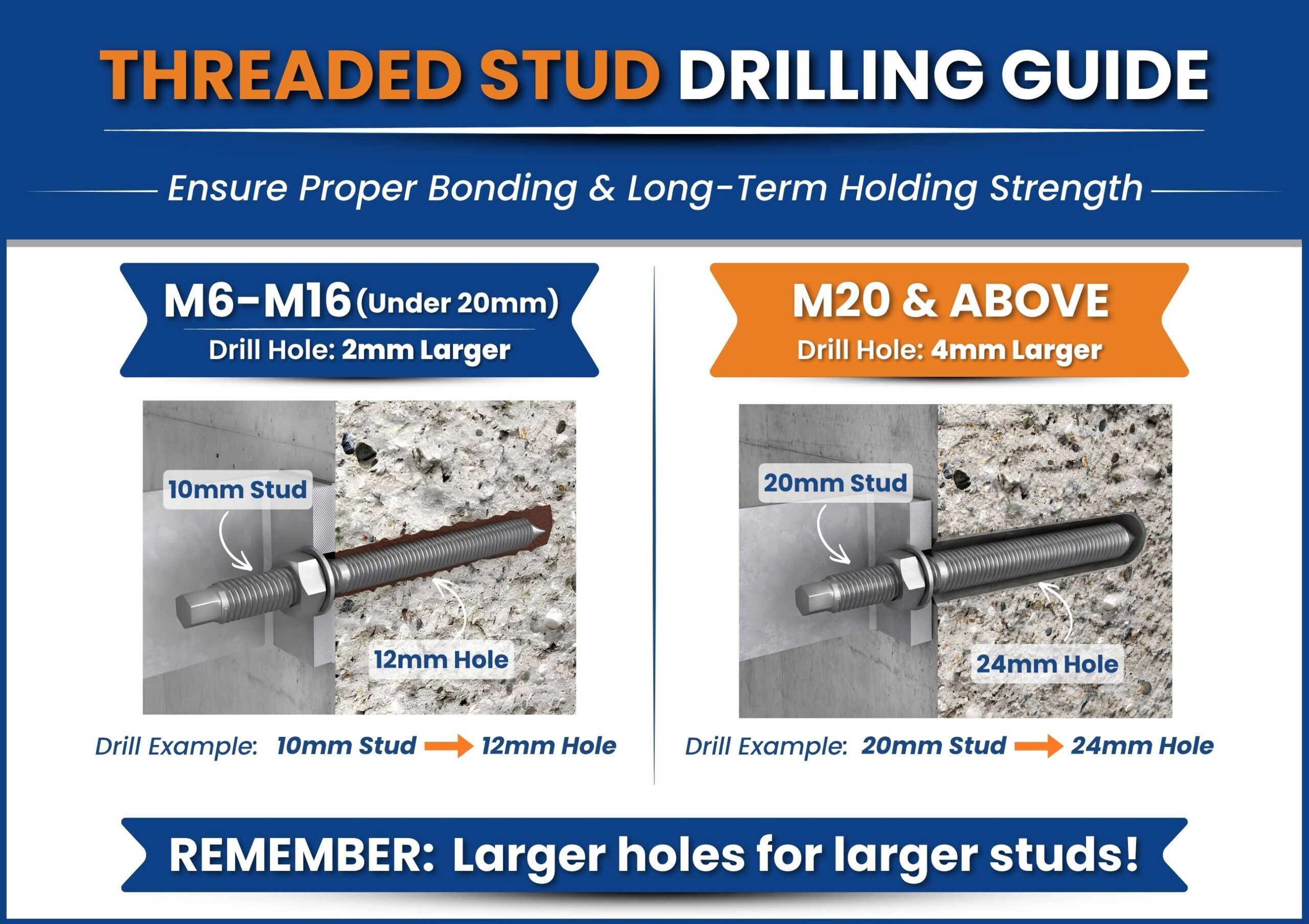
Chemical anchors shrink slightly as they cure, so the hole size matters more than you might think. For threaded studs under 20mm (M6–M16), drill 2mm larger than the stud diameter. But here’s the part many miss: for M20 and above, you need to drill 4mm larger. This ensures proper bonding and long-term holding strength.
2. Blow Out the Dust—Seriously, Don’t Skip This!
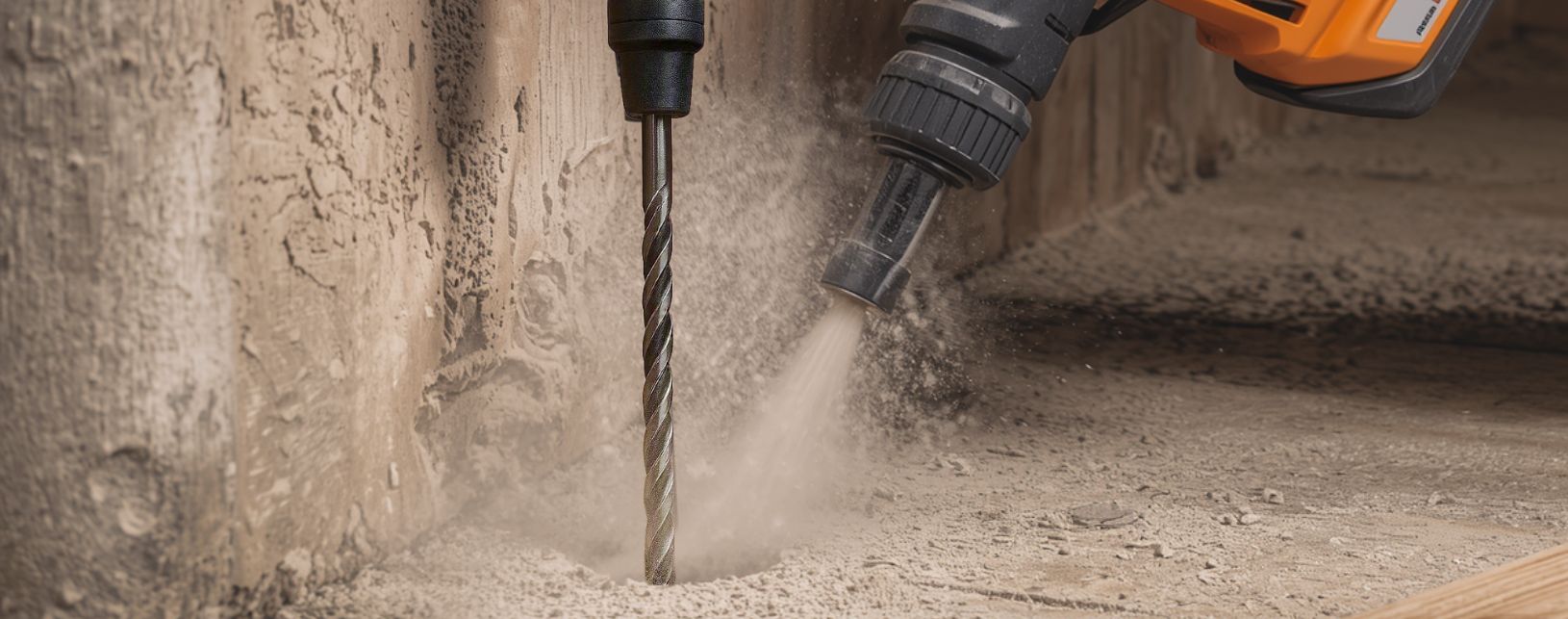
This step is often overlooked, but it’s absolutely critical. If you don’t blow the dust out of the hole, the chemical will bond to the dust—not the concrete. That means your anchor could pull out as easily as unplugging a cord. Use a blow pump or compressed air to clean the hole thoroughly before injecting the chemical.
3. Avoid Diamond Core Drills (Unless You’re Using E701585)
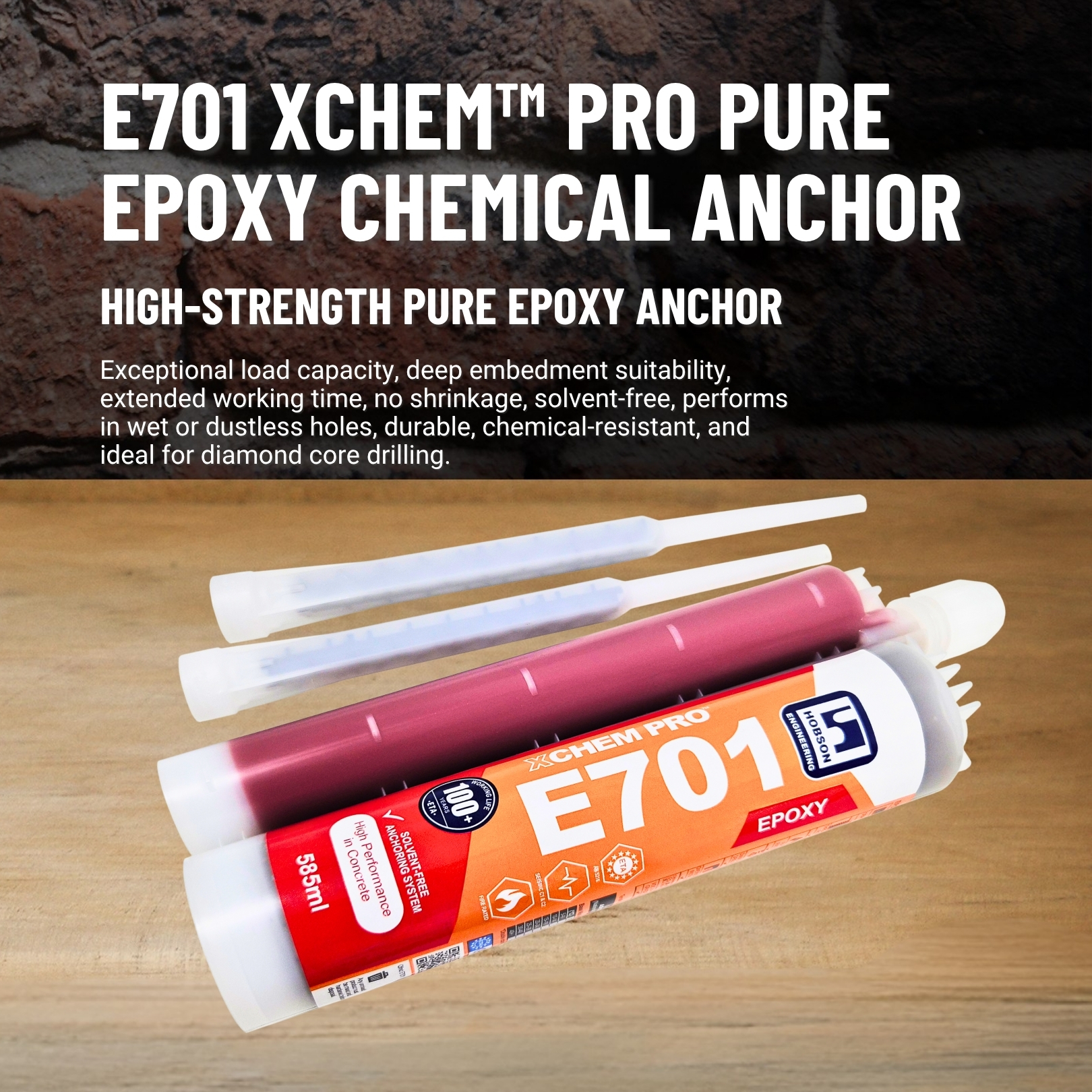
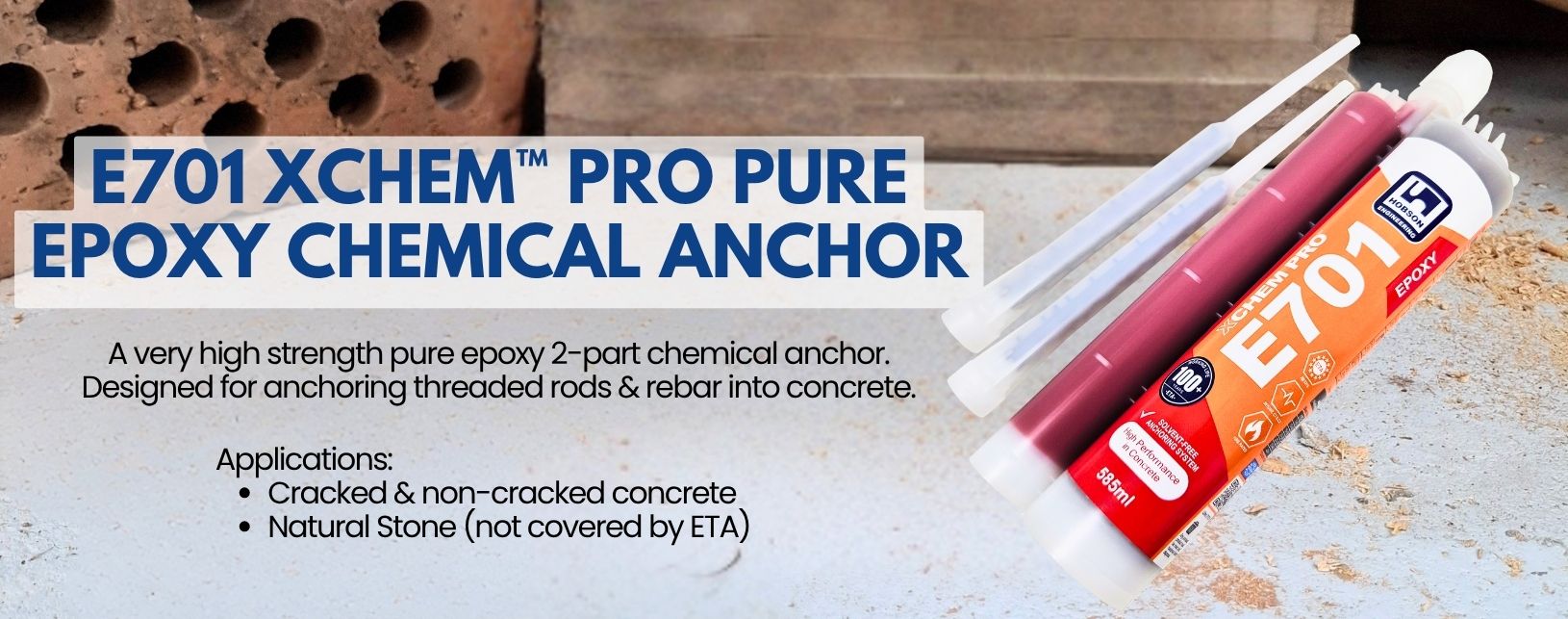
Diamond core drills create smooth holes, which most chemical anchors can’t grip effectively. Instead, use a hammer drill to create a rough surface that helps the chemical bond. The exception? E701585 Pure Epoxy. This product is specially formulated to bond even to smooth surfaces, making it ideal for core-drilled holes.
4. Prep Everything Before You Start
Chemical anchors set fast—sometimes within minutes. That means you need to have all holes drilled, cleaned, and ready before you start injecting. If you pause mid-job, the chemical can harden in the nozzle, wasting product and time. Plan ahead and work efficiently.
5. Know Your Cure Times—Read the Label!
Not all chemical anchors cure at the same rate. Some set in as little as an hour, while others—like Pure Epoxies (E701585)—can take 24 hours or more, depending on the temperature. Applying load before the anchor has fully cured can lead to failure. Always check the label for setting and curing times, and adjust your schedule accordingly.
Lorem ipsum dolor sit amet, consectetur adipiscing elit. Ut elit tellus, luctus nec ullamcorper mattis, pulvinar dapibus leo.
huge range
1000+ different products

Join our mailing list to stay up to date with all the latest specials and news.