No one likes having to throw away 5-10 screws for every 100 installed due to poor drilling performance, drivers chewing out, shafts breaking halfway into the material.
Let’s talk about what makes the difference between the average screw and the real deal! Just to be clear, we’re not going to be arrogant and say we’re the only people that sell good quality screws or that everything we’ve ever sold is perfect. We just have an obsession when it comes to quality fasteners and we would you like to help you to be able to identify good/bad so that you understand what’s happening when you’re having screws fail.
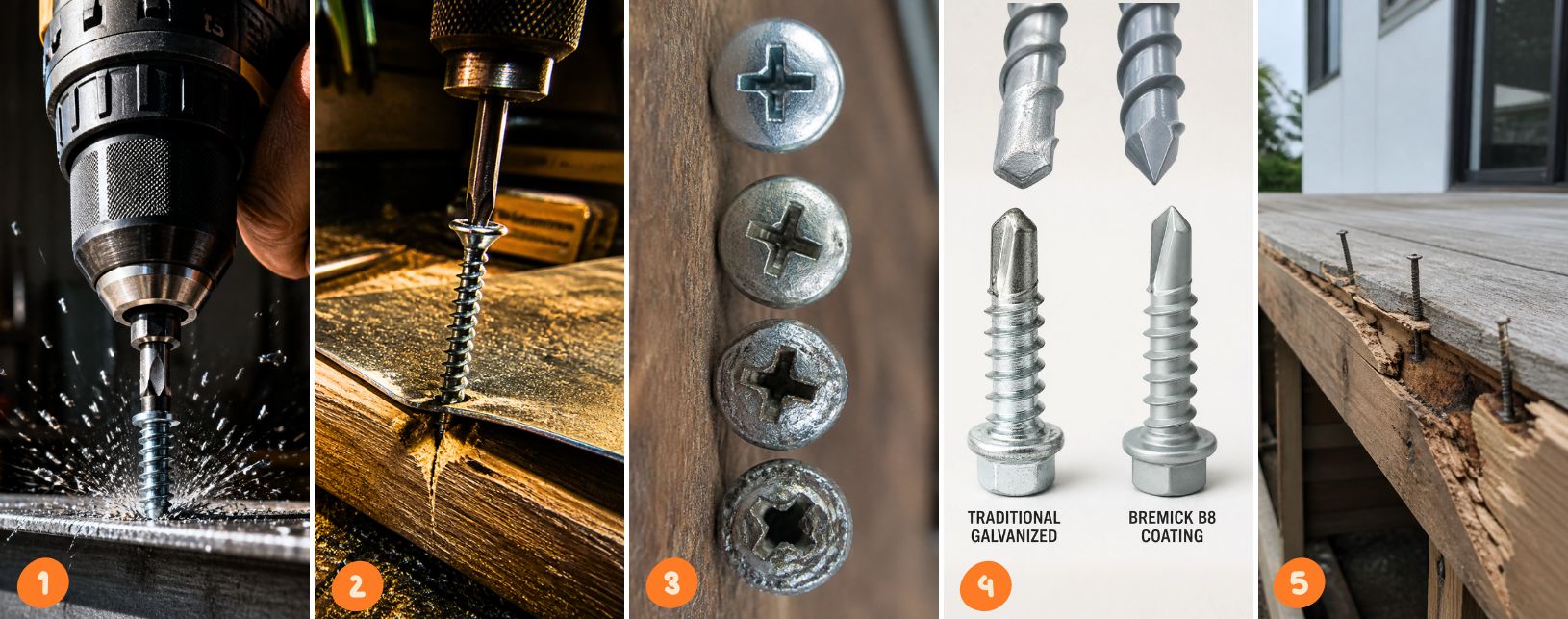
How to recognize poor screws when good and bad screws looks virtually the same:
1. Often you don’t know until you start screwing, for example with a self-drilling metal screw, start drilling into metal and you realise the tip is blunt
2. Start screwing through thin metal to wood with a needle point screw and the point wanders
3. Especially when it comes to Phillips head screws, many heads are poorly stamped which means your driver bit fails to get good purchase- therefore stripping out the drive. (Please note: driver bits often cop the blame for this however, more often than not it’s the screw that’s the culprit!)
4. Galvanised coatings: Some forms of galvanizing, while being great for corrosion resistance actually cause the drill tip to be blunt. A good alternative is Bremick B8 coating, a high corrosion resistant gal coating that is almost a powder-coated, painted on form of galvanizing leaving the tip still very sharp
5. Sometimes it’s not the screws fault at all, it’s the lack of expert advise available from the company selling the screws that leaves you with the wrong screws or the wrong installation method for your project resulting in costly failures.
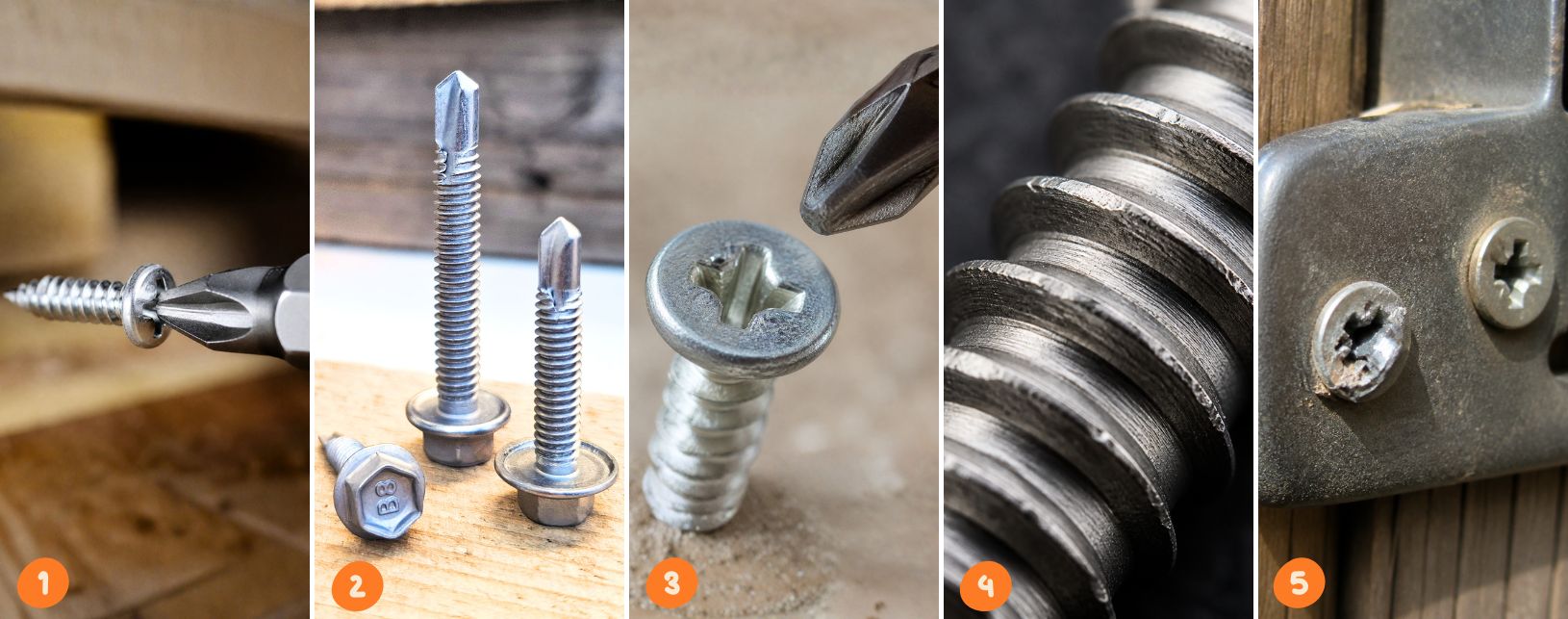
On the flipside, the simple points below identify the makings of a good screw:
1. Good quality Phillips head screws should almost grip onto your driver bit even if it’s not magnetic, screws that keep falling off your driver bit easily when horizontal are often a sign of being poorly stamped
2. Good, sharp self-drilling points shouldn’t wander
3. Galvanised coatings that make it hard to get the driver bit into the screw show signs that the coating is too thick, the tip will likely be blunt in this case as well
4. Good screw threads shouldn’t strip easily in their right applications
5. Finally, even good quality screws that don’t come with expert customer service advice and back up are doomed to fail in some applications!
Your best bet is, any screw failures your having whether you bought them at the hardware or from us even, give our experienced trouble-shooters a call. It’s not about whether they were bought from us or not, it’s about helping you solve your problems if we can. More often than not, screw failures come down to simply being used in the wrong application and a simple switch to fine thread for example, or switch of head or drill tip can make the biggest difference.